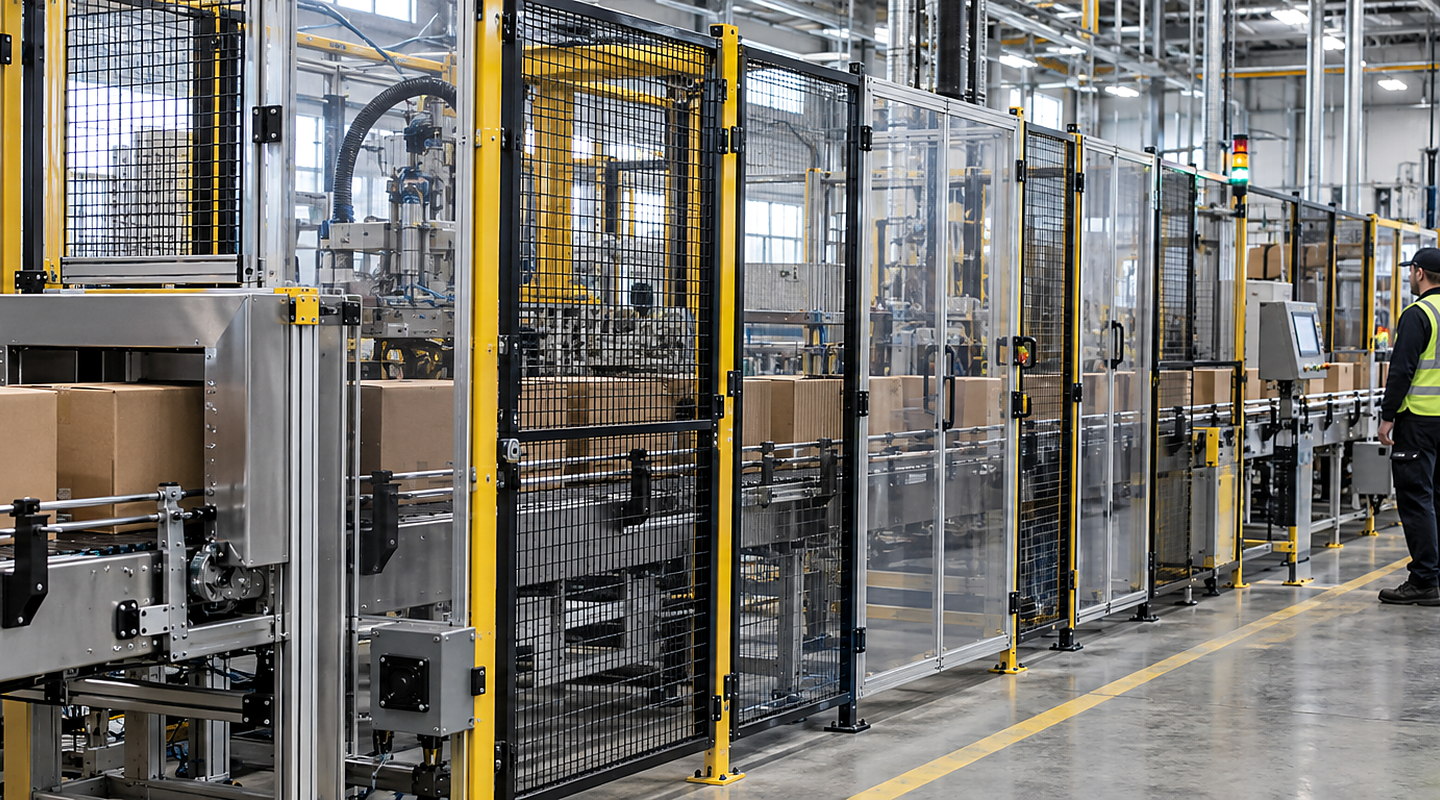
Agree conveyor safety acceptance evidence for the actual modified installation. Record the altered sections, linked-machine interfaces, foreseeable access tasks and required safety functions. Retain the assessed stop boundaries, reset/restart response, drawings and inspection/test records, with validation responsibilities and unresolved actions clearly identified.
Turn your production information into clearer decisions — Conveyor Safety Systems
Plan conveyor safety systems around your machine hazards, operator tasks, access, stopping behaviour and validation evidence. Discuss a site-specific safeguarding concept with Oxford Machine Guarding. Use this guide to resolve risk-reduction and validation evidence before it limits the final system.
Risk-Reduction and Validation Evidence: condition, range and effect on your process
Current condition
Record the conveyor and linked-machine layout, existing safeguards, control drawings, stopping information and the tasks performed at each opening. Identify altered sections, known faults and responsibilities for the proposed modification.
Realistic range
Include loading and discharge, inspection, cleaning, maintenance and blockage recovery, with access from platforms, below and beside the conveyor. Review upstream material, neighbouring movement, occupied areas and visibility when a section stops or access is restored.
Effect on the system
Record the assessed guarding and control response, stop boundaries and intended reset/restart behaviour. Retain expected and observed inspection/test results against the installed configuration, together with actions, instructions and validation responsibilities before use.
Before you contact us
Five questions about risk-reduction and validation evidence for your application
Who can confirm this information?Identify the person responsible for risk-reduction and validation evidence in production, quality, engineering or operations.
How representative is the sample?Include age, supplier, batch, environment and upstream process state where they affect conveyor safety systems.
What is the difficult condition?Include the slow, reflective, flexible, dirty, damaged, marginal or uncommon case that your system must still handle.
How will you judge the result?Agree the method, repetitions, acceptable range, result record and the response if the observed result falls outside the agreed range.
What else must be coordinated?Your final conveyor safety systems scope must also account for space, visibility and operator ergonomics, risk-reduction and validation evidence, current regulations and the conditions at your site.
Connected details
Review risk-reduction and validation evidence as part of the complete system
Question 1
Hazards and Foreseeable Access for Conveyor Safeguarding & Safety Controls
Retain a marked layout of reachable moving interfaces and access routes, including drives, rollers, return sections and transfers. Identify product openings separately from people access and record foreseeable intervention tasks.
Question 2
Machine Motion and Stopping Behaviour
Document the affected conveyor sections and connected machinery, existing stopping information and the assessed response. Record how continuing upstream material or neighbouring movement affects a stopped section.
Question 3
Operating, Cleaning and Maintenance Tasks
Describe loading, cleaning, maintenance and blockage-recovery tasks, including where guards are opened or removed. Have the site isolation arrangements and stored-energy considerations reviewed with the responsible team.
Question 4
Existing Control-System Architecture
Retain existing drawings, drive/device details and interface information. Identify modified safety functions and responsibilities, and document the complete connected installation rather than only individual components.
Question 5
Space, Visibility and Operator Ergonomics
Record where people may remain and which areas are visible to the operator. Include lighting, escape and the intended response after access, power loss or cleared blockages in the reset/restart review.
Question 6
Risk-Reduction and Validation Evidence
Agree the installed scope, drawings, inspection/test method and validation responsibilities. Retain expected and observed responses, outstanding actions, operating instructions and maintenance-access information for handover.