In brief

Choose an approach to conveyor safety systems by what the product or part does in production and by the result you need—not by sector name alone.

For safeguarding existing machinery for conveyor safeguarding and safety controls and planned machine modifications involving conveyor safeguarding and safety controls, different operating conditions can change the recommended approach.

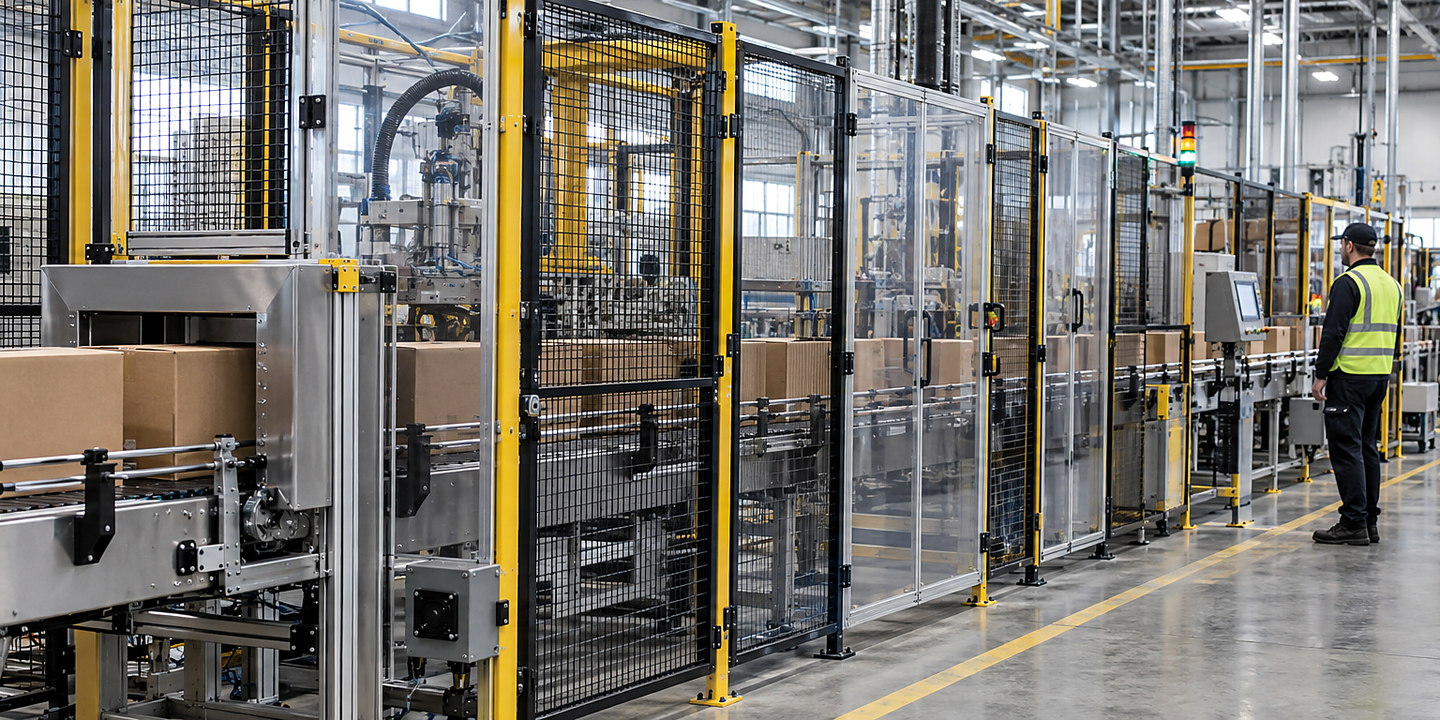
On the production floor

Match the solution to your product, part and operating needs — Conveyor Safety Systems

Plan conveyor safety systems around your machine hazards, operator tasks, access, stopping behaviour and validation evidence. Discuss a site-specific safeguarding concept with Oxford Machine Guarding. Use the application examples to compare safeguarding existing machinery for conveyor safeguarding and safety controls with planned machine modifications involving conveyor safeguarding and safety controls.

Discuss your application
Application 1

Safeguarding Existing Machinery for Conveyor Safeguarding and Safety Controls

For safeguarding existing machinery for conveyor safeguarding and safety controls, start by confirming hazards and foreseeable access for conveyor safeguarding & safety controls, machine motion and stopping behaviour, and operating, cleaning and maintenance tasks so the proposed system matches your real production needs.

Explore this application
Application 2

Planned Machine Modifications Involving Conveyor Safeguarding and Safety Controls

For planned machine modifications involving conveyor safeguarding and safety controls, start by confirming machine motion and stopping behaviour, operating, cleaning and maintenance tasks, and existing control-system architecture so the proposed system matches your real production needs.

Explore this application
Choose the right route

Four questions that can change the recommended approach

What arrives?

Describe the real range for hazards and foreseeable access for conveyor safeguarding & safety controls and machine motion and stopping behaviour, plus presentation and upstream controls—not just a nominal drawing.

What must happen?

Define the required outcome for safeguarding existing machinery for conveyor safeguarding and safety controls, the allowed window and what your team can recover without outside help.

What surrounds it?

Record the space, services, neighbouring equipment, people, cleaning and data connections around planned machine modifications involving conveyor safeguarding and safety controls.

What result do you need?

Agree representative trials, difficult samples and the result record for risk-reduction and validation evidence, including who will review it.

ApproachOften suitable whenWatch for
Conveyor Safety SystemsYou need a dedicated solution for a clearly defined duty, product or part range and line interface.Current standards and required performance levels must be assessed for the complete machine and intended use.
Fixed Physical Guarding where Access Is RareYour volumes, product mix or operator judgement make a simpler route more practical.Check ergonomics, consistency and safe access before choosing the lower-complexity option.
Interlocked or Presence-Sensing Protection where Frequent Intervention Is ForeseeableYour surrounding process is stable enough for a broader automated solution to add value.Allow for line connections, fault recovery and maintenance as well as the headline equipment.

Separate conveyor access tasks before choosing safeguards

The same conveyor can need different arrangements at a loading station, a transfer point and a maintenance access route. Start with the task at each location rather than applying one guard layout along the whole line.

Loading and product transfer

Record how products enter and leave, their largest credible dimensions and what an operator does when the flow is irregular. Include the return run, drive and adjoining equipment in the assessment. Product access is not automatically a safe opening for a person to reach through.

Cleaning and inspection

Identify the inspection that can be completed from outside the guarded area and the cleaning that requires access. Review visibility, removable deposits and access to lubrication points when designing the layout. A guard that obstructs every routine task may encourage unplanned removal; the task must be accommodated through a suitable assessed method.

Blockage recovery

List where product can jam and what force or movement can remain after a stop. Have a competent person define the isolation and recovery method. Pressing an emergency stop is not a substitute for isolating hazardous energy where the intervention requires isolation.

Changes to an existing line

A replacement conveyor, larger pack or extra transfer can alter reach, movement and stopping responsibilities. Keep the revised layout together with the interface list and validation record. Check how each connected machine behaves when one section stops, and who controls the return to production.

Review conveyor safety system scope

Further reading: HSE machinery safety, HSE maintenance guidance.